
Your Story Matters. Your Family Matters. Your Results Matter.


Awards and recognitions listed are not indicative of future results. Selection criteria vary by organization.
Fort Lauderdale Denied Insurance Claims Lawyer
When Your Claim Is Denied, the Insurance Company Has Already Decided What Your Case Is Worth. We Build the Case That Forces a Different Conclusion — Including Damages Beyond Policy Limits.
Insurance claim denials come in many forms. Your own UM/UIM insurer refuses to pay after an uninsured driver hit you. The at-fault driver’s insurer rejects your liability claim. A homeowners insurer denies a guest injury claim. An insurer drags out an investigation for months hoping you’ll accept a lower offer.
Each denial type involves different statutes, different proof requirements, and different leverage points — but they all share one thing in common: insurance companies count on you accepting “no” as final.
You shouldn’t.
Carlos D. Cabrera spent years as insurance defense counsel before becoming a trial lawyer. He knows the internal scoring systems, the loss-ratio metrics that drive denial decisions, and the legal triggers that turn a wrongful denial into a bad faith case worth far more than the original policy limits.
If your insurance claim was denied, delayed, or underpaid, Florida Advocates can help.
Florida Advocates handles PIP denials on a separate page. If your dispute is specifically about no-fault PIP benefits (the 14-day rule, $10K vs $2,500 EMC, or your own auto insurer denying medical bills), see our Fort Lauderdale PIP Lawyer page for that depth.
This page focuses on everything else: UM/UIM denials, liability claim denials by the at-fault driver’s insurer, bad faith claims with damages exceeding policy limits, and the broader category of insurance disputes after a Fort Lauderdale injury.
The Three Categories of Denied Injury Claims
Most denied insurance claims after a Fort Lauderdale injury fall into three categories. Each one operates under different rules.
1. UM/UIM Denials — Your Own Insurer Refuses to Step In
Under Florida Statute § 627.727, Uninsured/Underinsured Motorist (UM/UIM) coverage protects you when:
- The at-fault driver had no liability insurance (uninsured motorist)
- The at-fault driver’s policy limits are insufficient to cover your damages (underinsured motorist)
- A hit-and-run driver caused your injuries and was never identified
You pay extra premiums for this coverage. It is supposed to be there when you need it.
But UM/UIM denials are everywhere. Why? Because when your own insurer denies a UM/UIM claim, they are no longer your advocate — they are your adversary. They evaluate your claim the same way the at-fault driver’s insurer would: looking for fault to assign to you, disputing the seriousness of your injuries, undervaluing your damages.
Common UM/UIM denial tactics:
- Disputing the at-fault driver’s liability — even when the police report and witnesses are clear
- Arguing your injuries are not as serious as you claim — sending you to an “independent” medical examiner who consistently sides with insurers
- Disputing the hit-and-run — when no defendant can be identified, insurers sometimes claim “phantom vehicle” defenses
- Stacking disputes — challenging whether multiple UM/UIM policies on family vehicles can be combined
- Setoff arguments — claiming the at-fault driver’s small policy payment fully satisfies your claim
- Delay — financial pressure forces UM/UIM claimants to accept low offers
2. Third-Party Liability Denials — The At-Fault Driver’s Insurer Says No
When you file a claim against the at-fault driver’s liability insurance, you are dealing with an adversary insurer from day one. They have no contractual relationship with you. Their job is to protect their insured and minimize what they pay.
Common third-party liability denial tactics:
- Disputing fault — arguing their insured was not negligent or that you contributed to the crash
- Comparative fault arguments — under Florida Statute § 768.81, recovery is reduced by your percentage of fault, and barred entirely above 50%. Insurers push fault as high as possible.
- Causation disputes — claiming your injuries pre-existed or came from another source
- Damages disputes — contesting medical necessity, future treatment costs, and pain and suffering
- Policy limits cap — refusing to settle within limits when the value of your case exceeds those limits
This last point is critical. When a liability insurer refuses to settle within policy limits despite clear liability, they expose their own insured to an excess judgment — and create grounds for a bad faith claim that can exceed the policy limits entirely.
3. Insurance Bad Faith — When Damages Can Exceed Policy Limits
Bad faith is the most powerful tool a denied policyholder has. Under Florida Statute § 624.155, an insurance company that fails to handle claims in good faith can be liable for damages beyond the original policy limits.
We discuss this in detail below.
Florida Insurance Bad Faith — How Damages Can Exceed Policy Limits
This is where denied claims become high-value cases. Florida law provides a powerful remedy when insurers act in bad faith — and it is the reason a $25,000 policy denial can become a $1 million case.
What Florida Statute § 624.155 Requires
Florida insurers must handle claims in good faith. This includes:
- Investigating fairly and thoroughly — not just looking for reasons to deny
- Paying legitimate claims promptly — within statutory timeframes
- Not placing financial interests above duty to policyholders or claimants
- Settling claims within policy limits when liability is reasonably clear
- Communicating honestly about coverage, limits, and claim status
When insurers violate these duties, they may be liable for bad faith.
First-Party vs. Third-Party Bad Faith
First-party bad faith = your own insurer breaches the duty of good faith toward you. Common in UM/UIM claims and PIP disputes.
Third-party bad faith = the at-fault party’s insurer breaches the duty of good faith. The classic example: refusing a reasonable settlement within policy limits, then losing at trial for far more than the limits — exposing their insured to the excess judgment.
The Civil Remedy Notice Process
Before filing a bad faith lawsuit in Florida, the policyholder must file a Civil Remedy Notice (CRN) with the Florida Department of Financial Services and serve it on the insurer. This notice:
- Identifies the specific bad faith violations alleged
- Cites the relevant statutory provisions
- Gives the insurer 60 days to cure the violation
If the insurer fails to cure within 60 days, the policyholder can pursue a bad faith claim. Properly drafting and timing the Civil Remedy Notice is critical — errors can foreclose the bad faith remedy entirely.
Bad Faith Damages
If you prove bad faith, you can recover:
- The full amount of any excess judgment — the verdict against the insured that exceeded policy limits
- The benefits originally owed under the policy
- Consequential damages — caused by the insurer’s bad faith conduct (lost wages, lost business, emotional distress)
- Attorney fees and costs — under Florida’s fee-shifting statute
- Punitive damages — in egregious cases involving willful or wanton conduct
This is the legal mechanism that turns a denied $50,000 policy claim into a $500,000 recovery. The denial itself is the trigger — but it is the bad faith conduct surrounding the denial that creates the larger exposure.
The Insider’s View — How Insurance Adjusters Decide to Deny
Carlos D. Cabrera spent years inside the insurance industry as defense counsel. Here is how denial decisions actually get made:
The Loss Ratio Pressure
Adjusters are not measured on accuracy or fairness. They are measured on loss ratios — the percentage of premiums that come back out as claim payments. Lower loss ratios mean better performance reviews, bonuses, and promotions.
Every legitimate claim payment increases an adjuster’s loss ratio. Every successful denial reduces it.
This is why you cannot expect an adjuster to fairly evaluate your claim. The system rewards them for finding reasons to say no.
The Authority Structure
Adjusters operate within strict authority limits. A junior adjuster may have authority to settle a claim up to $25,000. Anything above that requires supervisor approval. Anything above $100,000 requires a claims committee review.
Here is the practical effect: adjusters protect their authority by keeping claims small. A $30,000 settlement that requires supervisor sign-off is a worse outcome for the adjuster than a $20,000 settlement they can authorize alone — even if $30,000 is the correct value.
This dynamic produces systematic undervaluation.
The “Special Investigation” Designation
When an insurer flags a claim for “Special Investigation,” it has been targeted for denial, not investigation. Special Investigation Units (SIUs) exist to find fraud — but in practice, many SIU referrals are claims the company has already decided to challenge.
Signs your claim has been flagged:
- Multiple Examination Under Oath (EUO) demands
- Requests for years of medical records unrelated to the accident
- Surveillance investigators following you
- Demands for tax returns and financial records
- Recorded interviews with your family and employer
If you see these signs, you need a lawyer who has dealt with SIU files. Carlos has worked them from the inside.
The “Independent” Medical Examination
When an insurer disputes the seriousness of your injuries, they send you to an “Independent Medical Examiner” (IME). The doctor is paid by the insurer and frequently sees the same insurer’s claimants over and over.
These doctors know what conclusions the insurer wants. They deliver them.
We counter IME reports with the opinions of your treating physicians — the doctors who have actually examined and cared for you over time. A treating physician’s opinion almost always carries more weight than a one-time IME.
Real Case Results: Denials Reversed
$2,500,000 — UM/UIM Denial Based on Citation Reversed
| Case Overview | Details |
|---|---|
| The Situation | Our client — a motorcyclist — was riding behind an ambulance when it stopped suddenly. He collided with the ambulance and was thrown from his bike. He was cited at the scene for following too closely. |
| Insurance Company’s Position | The insurer denied the claim, pointing to the citation as proof our client was at fault. End of discussion. |
| Our Investigation | We did not accept the police report as final. We interviewed witnesses, obtained the ambulance company’s GPS records and dispatch logs, and consulted accident reconstruction experts. The evidence proved the ambulance driver — not our client — caused the crash. |
| The Result | $2,500,000 — recovered despite the citation and initial denial. |
This case shows what happens when you don’t accept a denial as final. A police citation is not a verdict. Civil liability is determined by the full evidence, not the patrol officer’s split-second decision at the scene.
Over $400,000 — Liability Insurer’s Lowball Offer Multiplied 10x
| Case Overview | Details |
|---|---|
| The Situation | Our client was rear-ended at significant speed and required spinal surgery. The injury was serious, the liability was clear, and the medical evidence was strong. |
| Insurance Company’s Position | The liability insurer offered under $40,000, disputing the necessity of surgery and the extent of injuries. |
| Our Investigation | We documented the crash mechanism, obtained expert medical opinions on causation and future treatment needs, and prepared the case for trial. We made it clear that the insurer’s continued lowball stance was creating excess verdict exposure for their insured — and bad faith exposure for the insurer. |
| The Result | Over $400,000 — more than ten times the initial offer. |
The leverage in this case came from the insurer’s own conduct. Once they saw a credible path to an excess verdict and a bad faith claim, the offer changed dramatically.
$190,000 — Pre-Existing Condition Denial Defeated
| Case Overview | Details |
|---|---|
| The Situation | Our client was injured in a T-bone collision. The crash aggravated a pre-existing back condition. |
| Insurance Company’s Position | The adjuster reviewed medical records, found prior back treatment, and offered $55,000 — arguing the pre-existing condition (not the crash) caused the current symptoms. |
| Our Investigation | We obtained complete medical records showing the pre-existing condition had been managed and stable for years before the crash. We documented exactly how the impact transformed a controlled condition into a disabling injury. |
| The Result | $190,000 — nearly four times the initial offer. |
Past results do not guarantee future outcomes. Every case is evaluated on its individual facts.
Strategies That Make Denied Claims Pay
Defeating a denial is not just about disputing the denial reasons. Strategy matters. Here is how we approach denied claims to maximize recovery.
Setting Up the Bad Faith Claim from Day One
In claims with significant injuries, we structure our communications to create a bad faith record. This includes:
- Time-limited policy limits demand — written demand for full policy limits with a strict deadline
- Documented liability evidence — clear, organized package showing the at-fault party’s negligence
- Documented damages — medical records, expert opinions, lost wage documentation
- Reasonable opportunity to settle — demonstrating the insurer had every chance to resolve within limits
When an insurer rejects a clear, well-documented policy limits demand and the case later results in an excess verdict, the foundation for a bad faith claim is already in place.
The Strategic Use of Civil Remedy Notices
A Civil Remedy Notice is more than a procedural step — it is leverage. A properly drafted CRN:
- Forces the insurer’s claim department to engage senior management
- Triggers internal reserve adjustments (the insurer must increase the amount set aside for the claim)
- Creates documentary evidence of bad faith conduct that survives the cure period
- Often produces settlement movement during the 60-day cure window
Excess Carrier Notification
When a primary insurer is mishandling a claim, we sometimes notify the insured’s excess (umbrella) carrier of the situation. Excess carriers have their own interest in seeing the primary policy used appropriately — and can apply pressure on the primary insurer that policyholders alone cannot.
Federal Court Strategy
When out-of-state defendants are involved or amounts in controversy exceed $75,000, federal court may be available. Carlos D. Cabrera is admitted to all three U.S. District Courts in Florida. Federal court can offer faster scheduling, different discovery dynamics, and judges with deeper insurance law experience.
What to Do If Your Claim Was Denied
Immediate Actions
- Get the denial in writing — if you received a verbal denial, request written confirmation with the specific policy provisions cited
- Preserve all communications — emails, letters, voicemails, text messages with the insurer
- Stop giving recorded statements — anything you say can be used to reinforce the denial
- Do not accept the denial as final — many denials are reversed when challenged with proper evidence and legal arguments
Gather Documentation
- The denial letter (and any earlier correspondence)
- Your insurance policy (full policy, not just declarations page)
- All medical records and bills
- Police or incident reports
- Photos of accident scene, vehicles, injuries
- Names and contact information of witnesses
- Any recorded statements you have already given
Contact a Lawyer Before Responding to the Insurer
After a denial, insurers often request additional documentation, additional EUOs, or additional medical examinations. Do not respond to these requests without legal advice. Errors at this stage can foreclose your remedies.
Why Carlos D. Cabrera for Your Fort Lauderdale Denied Claim
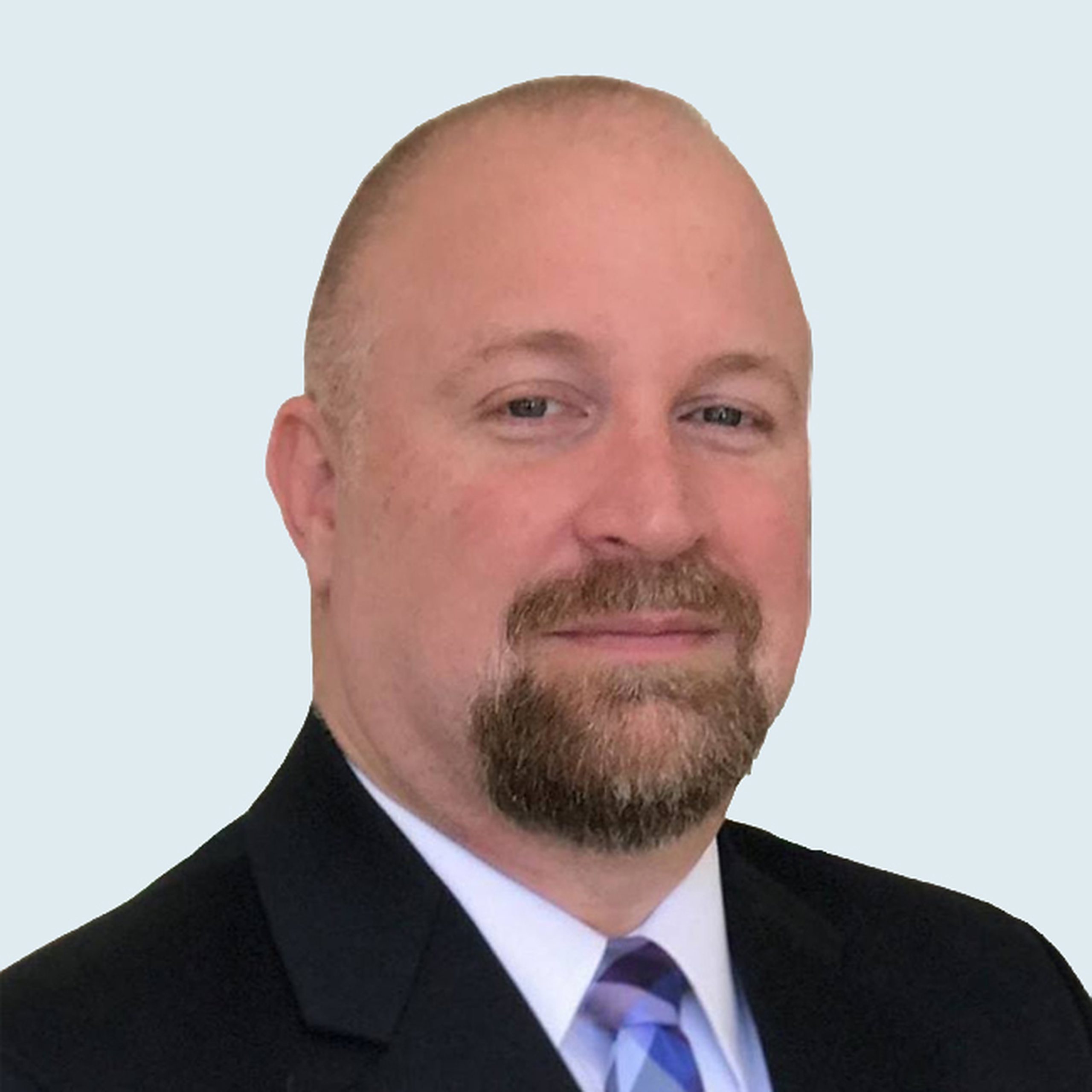
He Knows the Industry from the Inside
Before law school, Carlos D. Cabrera worked as insurance defense counsel handling complex claims under specialized procedures. He:
- Evaluated injury claims for denial and reduction
- Reviewed medical records to identify pre-existing conditions and causation disputes
- Developed the arguments insurers use against policyholders
- Handled his firm’s largest and most complex insurance defense matters, managing high-exposure claims under specialized handling protocols
When Carlos reviews your denied claim, he already knows what the adjuster was thinking, what the supervisor signed off on, and what the claims committee discussed.
That insider knowledge is the difference between accepting a denial and overturning it.
Bad Faith Litigation Experience
Carlos has handled bad faith claims throughout his 24+ years of insurance litigation. He knows when a denial is just a denial — and when a denial is the predicate for a bad faith case worth far more than the original policy limits.
ucation
- J.D. — St. Thomas University College of Law (2000)
- Managing Editor, St. Thomas Law Review
- B.A. English — Florida International University (1994)
Bar Admissions
- The Florida Bar
- U.S. District Court, Southern District of Florida
- U.S. District Court, Middle District of Florida
- U.S. District Court, Northern District of Florida
Carlos’s federal court admissions mean he can handle complex cases that cross state lines or involve federal questions — not just state court claims.
Credentials & Recognitions
- Million Dollar Advocates Forum Member
- Multi-Million Dollar Advocates Forum Member
- Florida Legal Elite Recognition
- Lead Counsel Verified (Appellate, since 2015)
- Former Insurance Defense Counsel
Learn more about Carlos D. Cabrera →
No Fee Unless We Win
We work on a contingency fee basis. That means:
- Free consultation — No cost to speak with us about your case
- No upfront fees — We advance all case costs (filing fees, expert witnesses, medical records, accident reconstruction)
- No Lawyer fees unless we recover for you — If we don’t win, you don’t pay
You will never receive a bill from us while your case is active. We only get paid when you do.
Contact a Fort Lauderdale Denied Insurance Claims Lawyer
If your injury claim was denied, delayed, or underpaid, contact Florida Advocates today.
Office Location: Florida Advocates 45 E Sheridan Street Dania Beach, FL 33004
Hours: Monday – Friday: 9:00 AM – 5:00 PM Available by phone 24/7 for emergencies
Call: 754-290-3803
Email: info@fladvocates.com
Call us for a free consultation. You pay nothing unless we recover for you. After all, isn’t that what family would do?
RELATED PAGES
- PIP claim denied? → Fort Lauderdale PIP Lawyer
- Car accident liability dispute? → Fort Lauderdale Car Accident Lawyer
- Motorcycle claim denied? → Fort Lauderdale Motorcycle Accident Lawyer
- General injury representation? → Fort Lauderdale Personal Injury Lawyer
Contact Us
Fill out the contact form or call us at 754-290-3803 to schedule your free consultation. Free Consultation
  Available 24/7
  No Fees Unless You Win