
Your Story Matters. Your Family Matters. Your Results Matter.


Awards and recognitions listed are not indicative of future results. Selection criteria vary by organization.
Florida Drunk Driving Accident Lawyer | Broward County & Fort Lauderdale
Florida Drunk Driving Accident Lawyer
When a Drunk Driver Hurts You or Kills Someone You Love, You Deserve Real Accountability — Not Just a Criminal Plea Deal
Florida Advocates represents victims of drunk driving crashes throughout Florida. From a side-street fender-bender at 11 PM to a fatal highway crash on I-95, every DUI crash creates two parallel cases: a criminal case the state pursues, and a civil case you have to pursue yourself.
The criminal case may result in jail time, probation, and a permanent record for the driver. But the criminal case does nothing for you. It does not pay your medical bills. It does not replace your lost income. It does not compensate your family for a wrongful death. It does not punish the driver financially for the harm they caused.
Carlos D. Cabrera was insurance defense counsel before he became a trial lawyer. He knows how insurers defend DUI cases — because he helped develop those defenses. Now he defeats them.
In Florida DUI cases, the civil law gives victims something rare: the right to pursue punitive damages as a matter of course. When a drunk driver injures you, you are not limited to compensation for actual losses — you can pursue damages designed to punish the driver beyond what your medical bills and lost wages add up to.
We pursue every available source of recovery: the drunk driver, their insurance, your own UM/UIM coverage, dram shop liability where it applies, and any other negligent parties.
Florida DUI Statistics — The Scope of the Problem
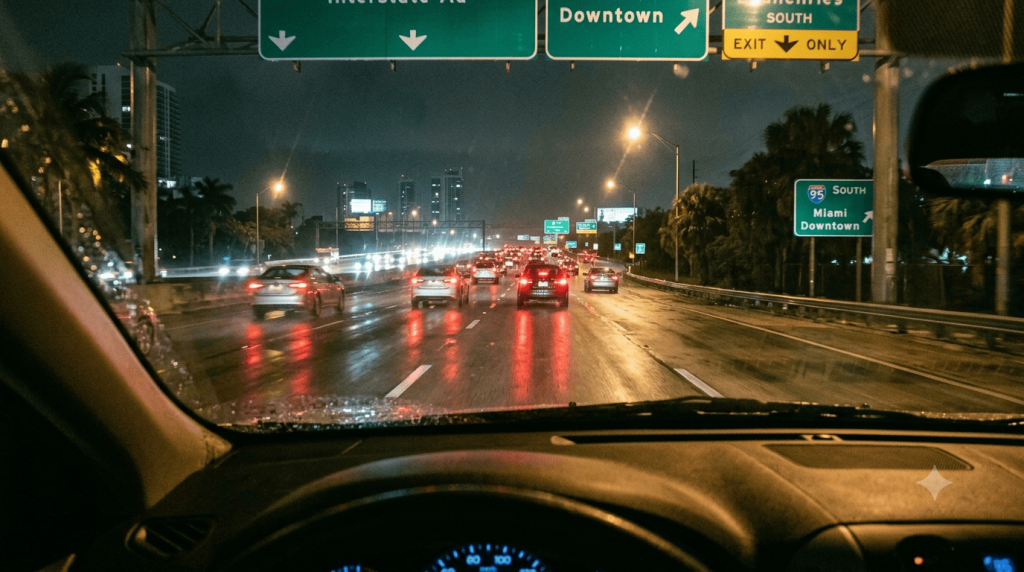
According to the Florida Department of Highway Safety and Motor Vehicles and federal data:
| Statistic | Approximate Annual Figure |
|---|---|
| Florida DUI-related crashes (2023) | 4,800+ |
| Florida DUI-related injuries (2023) | 3,200+ |
| Florida DUI-related fatalities (2023) | 800+ |
| Percentage of Florida traffic fatalities involving alcohol | ~28% |
Florida consistently ranks among the top states in the nation for DUI fatalities. Year-round driving conditions, dense tourist activity in beach areas, late-night entertainment districts, and a culture of vacation drinking combine to create conditions where DUI crashes happen at every hour and on every kind of road in Florida.
DUI crashes are not random — they are concentrated in predictable ways:
- Late-night hours (10 PM – 3 AM) — when bars close
- Weekends and holidays — especially Friday and Saturday nights
- Tourist destinations — beach areas, entertainment districts, theme park areas
- Sporting events and concerts — when alcohol consumption is high
- Highway corridors — I-95, I-75, I-4, the Turnpike, and US-1
- Areas with high bar and restaurant density — downtown areas, beachfront strips
The victims are predictable, too: families heading home from dinner, drivers on the way to work the morning shift, passengers in the drunk driver’s own car, pedestrians, cyclists, and other road users who did nothing wrong.
Florida DUI Civil Law — What Drunk Drivers and Their Insurers Don’t Want You to Know
The Civil Case is Separate from the Criminal Case
When a drunk driver causes a crash, two cases happen simultaneously:
- The State’s Criminal Case — prosecuting the driver under Florida Statute § 316.193 for DUI, with potential penalties including jail, fines, license suspension, and probation
- Your Civil Case — pursuing financial compensation from the driver and their insurer for the harm caused
These cases run on different tracks. You do not have to wait for the criminal case to conclude before filing a civil claim. The criminal outcome does not control the civil outcome. A criminal acquittal does not prevent civil recovery — the standard of proof is much lower in civil court (“preponderance of evidence” rather than “beyond a reasonable doubt”). And a criminal conviction can be used as evidence of negligence in the civil case.
Punitive Damages — A Florida Right for DUI Victims
Under Florida Statute § 768.72, punitive damages are available when a defendant’s conduct was particularly egregious. DUI is the textbook example of conduct that justifies punitive damages.
Florida courts have consistently treated DUI as the type of conduct that crosses the line from negligence into “gross negligence” or “willful and wanton misconduct” — exactly the standard for punitive damages.
This is significant because:
- Punitive damages can dramatically increase the total recovery — sometimes equaling or exceeding the compensatory damages
- Punitive damages punish the drunk driver beyond their actual losses caused
- Insurance policies typically do not cover punitive damages — meaning the driver may face personal financial exposure beyond their policy limits
- A high BAC level, prior DUI history, or particularly reckless driving can support larger punitive awards
We pursue punitive damages in every appropriate DUI case to maximize accountability and compensation.
Florida Dram Shop Liability is Narrow
Under Florida Statute § 768.125, Florida limits the liability of bars and restaurants that serve alcohol to drivers who later cause crashes. Florida is not a general dram shop liability state.
A bar or restaurant is civilly liable only in two specific situations:
- Serving alcohol to a person known to be habitually addicted — the establishment had knowledge of the patron’s addiction and served them anyway
- Serving alcohol to a person under 21 — the legal drinking age
Florida law does not make bars liable for simply serving visibly intoxicated adults. This is a significant limitation compared to many other states.
However, when these narrow conditions apply, dram shop claims can dramatically expand the available insurance recovery — particularly in cases involving:
- Underage drinking that led to a DUI crash
- A patron with a known history of alcohol addiction
- College town environments and bars with documented service patterns
We investigate every DUI case for potential dram shop claims, including obtaining surveillance footage, receipts, witness statements from staff, and patron testimony.
UM/UIM Coverage — Your Own Insurance Protects You
Many DUI drivers carry only minimum insurance — often $10,000 per person, $20,000 per accident in Florida — which is inadequate for serious injuries.
This is where your own uninsured/underinsured motorist (UM/UIM) coverage becomes critical. UM/UIM coverage:
- Applies when the at-fault driver had no insurance
- Applies when the at-fault driver’s policy limits are insufficient to cover your damages
- Applies in DUI cases regardless of whether the driver is criminally prosecuted
- Can stack across multiple policies in some situations
We pursue UM/UIM as a layer of recovery in nearly every DUI case where the at-fault driver’s coverage is insufficient.
Learn more about UM/UIM and denied insurance claims →
Modified Comparative Negligence — March 2023
Florida’s modified comparative negligence rule under Florida Statute § 768.81, revised in March 2023:
- If you are partially at fault below 50%, your recovery is reduced by your percentage of fault
- If you are more than 50% at fault, you cannot recover any damages
In DUI cases, comparative negligence is usually minimal — drunk drivers are almost always primarily at fault. But insurers occasionally argue contributory negligence based on the victim’s speed, lane position, or alleged reaction time. We defeat these arguments aggressively in DUI cases.
Statute of Limitations — Two Years
Two years from the date of the accident to file a personal injury lawsuit. Two years from the date of death to file a wrongful death claim. Missing these deadlines permanently eliminates your right to compensation.
DUI cases involve evidence that deteriorates quickly — surveillance footage from bars, dashcam recordings, breathalyzer logs, witness recollections. Contact us as early as possible.
Common DUI Crash Scenarios
Head-On Collisions
DUI drivers often drift across the center line or enter the highway in the wrong direction. Head-on collisions caused by impaired drivers are among the deadliest crashes that occur on Florida roads.
Wrong-Way Crashes
Highway wrong-way crashes are disproportionately caused by impaired drivers — particularly on I-95, I-75, and the Turnpike. These crashes occur at high speed and typically cause catastrophic or fatal injuries.
Rear-End Crashes at Stops
DUI drivers commonly fail to stop at red lights and stop signs, slamming into stopped vehicles ahead. These crashes often happen at intersections near downtown entertainment districts and bar areas.
T-Bone (Side Impact) Crashes
Drunk drivers running stop signs and red lights cause side-impact crashes at intersections. These crashes can be particularly devastating because the side of a vehicle offers less protection than the front or rear.
Single-Vehicle Crashes With Innocent Passengers
DUI drivers crash into trees, poles, or guardrails — often with sober passengers in the vehicle. These passengers are entitled to recover from the driver’s liability coverage.
Pedestrian and Cyclist Strikes
Impaired drivers strike pedestrians and cyclists who are visible and have right-of-way. These crashes often happen near beach areas, downtown corridors, and late-night entertainment districts.
Boating DUI Crashes
Florida’s boating DUI law (Florida Statute § 327.35) is similar to vehicle DUI. Boating crashes caused by intoxicated operators can support both civil personal injury claims and punitive damages.
Who Can Be Held Liable in a Florida DUI Case
A DUI civil case may have multiple liable parties:
The Drunk Driver
The primary defendant. Civilly liable for compensatory and potentially punitive damages.
The Drunk Driver’s Insurance Company
Liable up to policy limits — but pursued aggressively for full coverage, plus potential bad faith damages if they fail to settle reasonably within policy limits.
The Bar or Restaurant (Limited Circumstances)
Liable under Florida’s narrow dram shop statute when the establishment served alcohol to a habitually addicted person or to someone under 21.
The Host of a Private Party (Even Narrower)
Florida social host liability is extremely limited but may apply when a host knowingly served alcohol to a minor.
The Employer (If Driver Was on the Job)
Vicariously liable if the drunk driver was acting within the scope of employment at the time of the crash.
Vehicle Owners
The owner of the vehicle being driven may be liable under Florida’s “dangerous instrumentality” doctrine — meaning loaning a vehicle to a person who causes injury creates owner liability up to a statutory cap.
Other Negligent Parties
Roadway design, vehicle defects, and other contributing factors may bring additional defendants into the case.
We investigate every DUI case for the full chain of potential liability — because identifying additional defendants typically means more available insurance coverage and a larger total recovery.
Common Injuries in DUI Crashes
DUI crashes tend to produce particularly severe injuries because:
- Impaired drivers often crash at high speeds
- They fail to brake or react before impact
- Many DUI crashes involve head-on or wrong-way scenarios
- Drunk drivers often run red lights or stop signs, causing T-bone collisions
Common injuries include:
Traumatic Brain Injury (TBI)
Concussions, contusions, intracranial bleeding, and severe brain injuries are common in high-speed DUI crashes. Symptoms may not appear immediately.
Spinal Cord Injuries
Herniated discs, nerve damage, and partial or complete paralysis from high-impact collisions.
Broken Bones and Fractures
Pelvis, hip, femur, ribs, sternum, arms, wrists, and skull fractures are all common.
Internal Organ Damage
Liver, spleen, kidney, and other organ damage from blunt force impact. Internal bleeding may be life-threatening and is not always immediately apparent.
Burn Injuries
Vehicle fires can occur in serious DUI crashes, particularly head-on collisions involving fuel system damage.
Crush Injuries and Amputation
In severe DUI crashes, victims may suffer crush injuries requiring surgical amputation.
Psychological Injuries
PTSD, anxiety, depression, and fear of driving are common after DUI crashes — particularly when a loved one was injured or killed.
Wrongful Death
DUI crashes have a fatality rate disproportionate to other crash types.
Learn more about wrongful death claims →
What to Do After a Florida DUI Crash
At the Scene
- Do not move if you cannot do so safely — let paramedics assess you
- Call 911 — police will likely investigate for DUI on their own, but make sure they know alcohol may be involved
- Accept emergency medical treatment — adrenaline masks injuries
- Photograph everything:
- The other driver (and any visible signs of intoxication)
- License plates of both vehicles
- The driver’s license and insurance card
- The crash scene from multiple angles
- Your injuries
- Skid marks or lack of skid marks (DUI drivers often don’t brake)
- Open containers, smell of alcohol, anything visible in the other vehicle
- Get witness contact information — names and phone numbers of anyone who saw the crash or saw the drunk driver before the crash
- Do NOT discuss fault at the scene
Within 14 Days
SEE A DOCTOR WITHIN 14 DAYS to preserve PIP benefits. Even if you feel fine, miss the 14-day window and you forfeit your PIP coverage permanently.
- See a doctor within 14 days — even if injuries seem minor
- Document all symptoms — keep a daily journal of pain, limitations, and impact on daily life
- Keep all medical records, bills, and receipts
Preserve Critical Evidence
Surveillance footage from bars, restaurants, and businesses near the crash can be deleted within days. Notify Florida Advocates immediately so we can send preservation letters to relevant establishments before video is overwritten.
- Note any bar or restaurant the drunk driver was at before the crash
- Document the driver’s identity and behavior at the scene
- Get a copy of the police report as soon as it is available (typically 7-10 days)
- Note any breathalyzer or field sobriety test results
Protect Your Claim
- Do NOT give recorded statements to any insurance company
- Do NOT sign anything from an insurance adjuster
- Do NOT accept a quick settlement offer
- Do NOT post on social media about the crash
- Contact Florida Advocates for a free consultation
Damages You Can Pursue in a Florida DUI Case
Economic Damages
- Medical expenses — emergency care, surgery, hospitalization, rehabilitation, future treatment
- Lost wages — past and future
- Reduced earning capacity from permanent disability
- Property damage — vehicle repair or replacement, personal items damaged in the crash
- Home modifications — for catastrophic injuries
- Adaptive equipment — prosthetics, mobility devices
Non-Economic Damages
- Pain and suffering
- Emotional distress — PTSD, anxiety, depression, fear of driving
- Permanent disability or disfigurement
- Loss of enjoyment of life
- Loss of consortium — impact on your relationship with your spouse
Wrongful Death Damages
When a drunk driver causes a fatal crash, surviving family members can pursue:
- Funeral and burial expenses
- Lost financial support
- Loss of companionship, guidance, and protection
- Mental pain and suffering of survivors
Punitive Damages — A Florida DUI Hallmark
Under Florida Statute § 768.72, punitive damages are available in DUI cases. These damages:
- Are designed to punish the drunk driver, not just compensate the victim
- Can substantially exceed compensatory damages
- Are typically not covered by the drunk driver’s insurance — creating personal financial exposure
- Are particularly available where the at-fault driver had a high BAC, prior DUI history, or showed wanton disregard for others
Bad Faith Damages
When an insurer unreasonably refuses to settle a clear DUI liability case within policy limits — exposing the at-fault driver to an excess verdict — bad faith damages may exceed the original policy limits.
Learn more about insurance bad faith →
Frequently Asked Questions — Florida Drunk Driving Accidents
Can I sue a drunk driver in Florida for injuries from a crash?
Yes. A drunk driver who causes a crash is civilly liable to anyone injured by the crash — regardless of whether they are also criminally prosecuted for DUI. The civil case is separate from the criminal case. You do not need to wait for the criminal case to conclude before filing a civil claim, and the criminal outcome does not control the civil case.
Can I get punitive damages from a drunk driver in Florida?
Yes. Florida Statute § 768.72 allows punitive damages when a defendant’s conduct was particularly egregious. DUI is treated by Florida law and Florida courts as conduct that justifies punitive damages — meaning juries can award damages designed to punish the drunk driver beyond compensating for actual losses.
Can I sue the bar or restaurant that served the drunk driver?
Florida dram shop law is narrow. Under Florida Statute § 768.125, a bar or restaurant is liable for serving alcohol only when it knowingly serves a person who is habitually addicted to alcohol, or when it serves alcohol to a person under 21. Florida is not a general dram shop liability state — meaning bars are not automatically liable for serving visibly intoxicated adults.
What if the drunk driver has no insurance or low insurance?
Your own uninsured/underinsured motorist (UM/UIM) coverage applies in DUI crashes, regardless of who caused the crash. We pursue UM/UIM as a layer of recovery in nearly every DUI case where the at-fault driver’s policy limits are insufficient.
What if a loved one was killed by a drunk driver?
When a drunk driver causes a fatal crash, surviving family members can pursue a Florida wrongful death claim. Recoverable damages include lost financial support, loss of companionship and guidance, funeral and burial expenses, mental pain and suffering, and punitive damages. Wrongful death claims must be filed within two years of the date of death.
How long do I have to file a Florida drunk driving accident claim?
Two years from the date of the accident under Florida’s modified statute of limitations for personal injury. Wrongful death claims must be filed within two years of the date of death. Evidence in DUI cases can deteriorate quickly — contact a lawyer as early as possible after a DUI crash.
Does the criminal case affect my civil case against the drunk driver?
The criminal and civil cases are separate, but they interact. A criminal conviction for DUI can be used as evidence of negligence in the civil case. A criminal acquittal does not prevent the civil case from succeeding — the standard of proof is much lower in civil court.
Does PIP cover my injuries if I was hit by a drunk driver?
Yes. Florida PIP is no-fault coverage, meaning it pays regardless of who caused the crash. PIP covers 80% of reasonable medical expenses up to $10,000 and 60% of lost wages. The 14-day rule applies — you must seek medical treatment within 14 days of the crash to qualify for PIP.
Why Carlos D. Cabrera for Your Florida DUI Accident Case

Insurance Insider Experience
MMost personal injury lawyers have only ever worked one side of a claim. Carlos D. Cabrera worked on both sides.
Before law school, Carlos worked as insurance defense counsel. He:
- Evaluated complex auto liability claims, including DUI cases
- Reviewed medical records to identify pre-existing conditions
- Developed the valuation arguments insurers use to justify low offers
- Was selected to handle his firm’s largest and most complex insurance defense matters, managing high-exposure claims under specialized handling protocols
DUI cases bring out the most aggressive insurance defense tactics — particularly when punitive damages are at stake. Carlos knows those tactics from the inside.
Punitive Damages and Bad Faith Litigation Experience
Carlos has handled punitive damages claims and bad faith claims throughout his 24+ years of insurance litigation. He knows when an insurer’s refusal to settle a clear DUI liability case within policy limits creates the predicate for damages exceeding policy limits.
Education
- J.D. — St. Thomas University College of Law (2000)
- Managing Editor, St. Thomas Law Review
- B.A. English — Florida International University (1994)
Bar Admissions
- The Florida Bar
- U.S. District Court, Southern District of Florida
- U.S. District Court, Middle District of Florida
- U.S. District Court, Northern District of Florida
Credentials & Recognitions
- Million Dollar Advocates Forum Member
- Multi-Million Dollar Advocates Forum Member
- Florida Legal Elite Recognition
- Lead Counsel Verified (Appellate, since 2015)
- Former Insurance Defense Counsel
Learn more about Carlos D. Cabrera →
No Fee Unless We Win
We work on a contingency fee basis:
- Free consultation — no cost to speak with us
- No upfront fees — we advance all case costs (filing fees, expert witnesses, accident reconstruction, medical records, dram shop investigation)
- No fees unless we recover for you
DUI cases involve substantial investigation costs — bar surveillance footage retrieval, accident reconstruction, expert toxicology testimony, criminal record acquisition, and witness investigation. We advance all of these costs. You pay nothing while the case is active.
About Florida Advocates
Florida Advocates is a statewide personal injury law firm headquartered in Dania Beach, Florida, with additional offices in North Miami, Tampa, Miami, Orlando, and Tallahassee. We represent injured clients throughout Florida.
Office Locations:
Dania Beach (Broward County) — Headquarters
45 E Sheridan Street Dania Beach, FL 33004
North Miami (Miami-Dade County)
13499 Biscayne Blvd #107 North Miami, FL 33181
Tampa (Hillsborough County)
238 E Davis Blvd #210 Tampa, FL 33606
Phone: 754-290-3803
Email: info@fladvocates.com
Hours: Monday – Friday: 9:00 AM – 5:00 PM
Available by phone 24/7 for emergencies
Contact a Florida Drunk Driving Accident Lawyer
If you or a loved one was injured by a drunk driver, contact Florida Advocates today. Time matters — surveillance footage, witness recollections, and physical evidence all deteriorate quickly. Call now to protect your case and pursue full accountability.
Phone: 754-263-4252
Email: info@fladvocates.com
Call us for a free consultation. You pay nothing unless we recover for you. After all, isn’t that what family would do?
Communities We Serve Throughout Florida
- Fort Lauderdale and Broward County
- Fort Myers and Lee County
- Miami and Miami-Dade County
- Tampa and Hillsborough County
- Orlando and Orange County
- Hollywood, Pompano Beach, Coral Springs, Plantation
- Cape Coral, Bonita Springs, Estero, Sanibel
- Statewide representation available
Related Pages
Contact Us
Fill out the contact form or call us at 754-290-3803 to schedule your free consultation. Free Consultation
  Available 24/7
  No Fees Unless You Win